
Industry & Energy
US-Iran Peace Deal Reopen Hormuz, Easing India's Fertilizer & LNG Supply Crunch
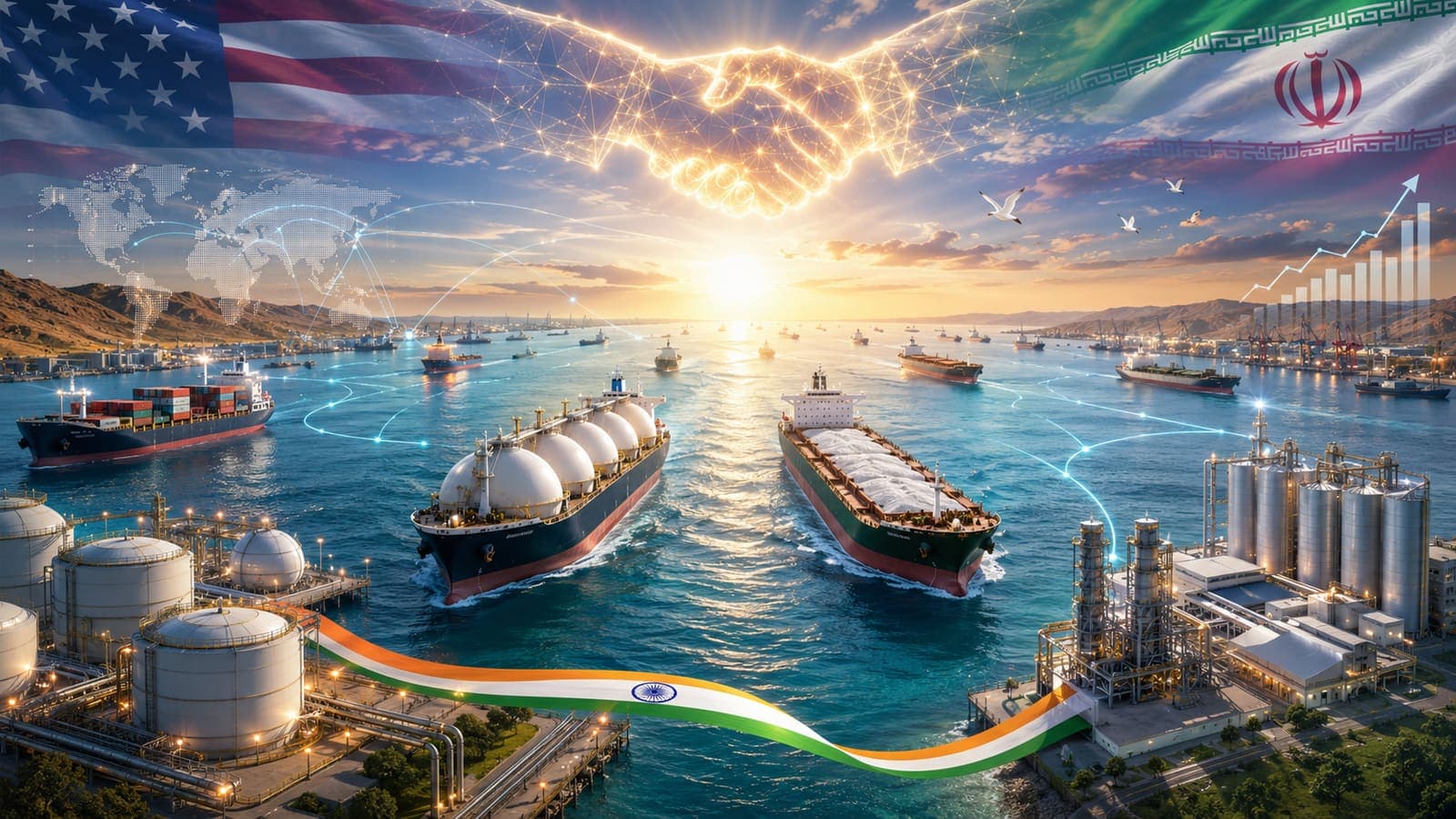
USA and Tehran have reached an understanding aimed at ending recent military hostilities and restoring safe navigation through the Strait of Hormuz, one of the world's most critical energy transit routes, with both sides agreeing to continue talks over a further 60 days on unresolved issues around Iran's nuclear programme.
The Strait carries an estimated 15 million barrels of oil per day from major Gulf producers including Saudi Arabia, Iraq, UAE, Kuwait, Iran, and Qatar. Before tensions escalated, the Gulf region supplied roughly 40% of India's crude oil imports, making any disruption to the route directly felt across Indian industry.
The impact has been particularly acute for India's fertilizer sector. Over 40% of the country's urea and phosphate supply is sourced from the Gulf region, and a drop in LNG output from Qatar during the crisis forced India to cut production at three urea plants — a squeeze that ripples through the broader agriculture and chemical manufacturing supply chain.
A full reopening of the Strait would help stabilize oil and LNG markets, ease freight and insurance costs for importers, and allow accumulated crude inventories to move more freely — developments that industrial manufacturers dependent on stable raw-material and energy supply, including the coatings and specialty chemicals sector, would welcome.
While industry officials expect shipping to normalize within a few weeks of a formal agreement, LNG and refined product flows may take longer to fully recover given the scale of disruption over recent months.
Courtesy: LiveMint. This article has been shared for informational purposes; all rights to the original content belong to the source publication.