
Space & Technology
ISRO Successfully Launches GSLV-F17 Rocket Carrying Earth Observation Satellite EOS-05
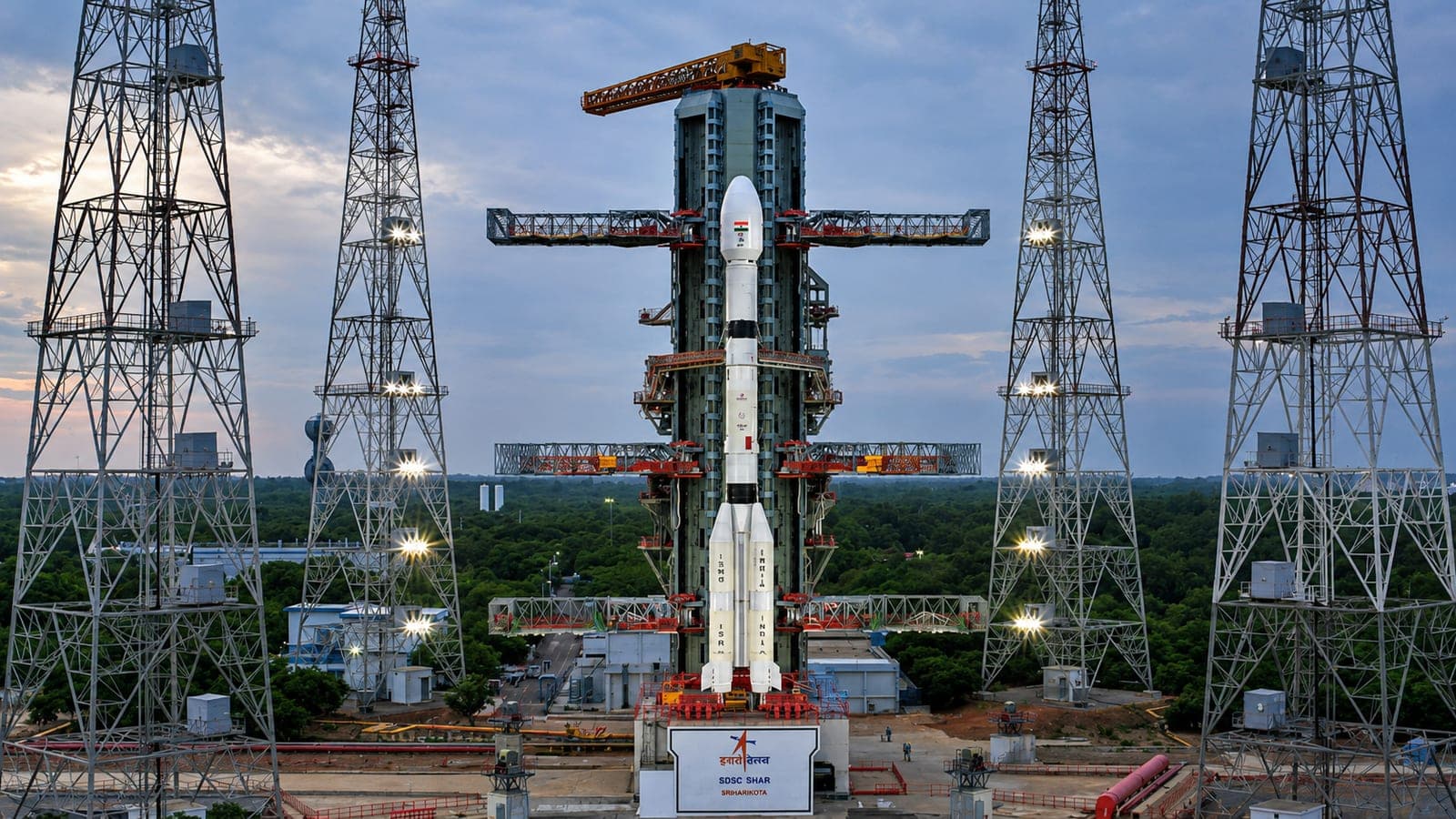
The Indian Space Research Organisation (ISRO) has successfully launched its GSLV-F17 rocket carrying the EOS-05 Earth observation satellite, marking another significant milestone for India's growing space programme.
The launch took place at approximately 2:55 AM IST from the Second Launch Pad at the Satish Dhawan Space Centre in Sriharikota, Andhra Pradesh. Despite stormy weather conditions, the 51.7-metre-tall GSLV-F17 — weighing around 420 tonnes at liftoff — lit up the night sky as it powered into orbit, drawing attention for pulling off a challenging night launch in the rain.
Approximately 19 minutes after liftoff, the rocket successfully placed EOS-05 into its planned Sub-Geosynchronous Transfer Orbit (Sub-GTO), from where the satellite will use its own propulsion system to reach its final geosynchronous orbit.
This was the 19th flight of the GSLV (Geosynchronous Satellite Launch Vehicle) programme, and it comes after a roughly seven-month gap in ISRO launches following hardware investigations conducted over the preceding winter months — making this mission an important confidence-builder for the agency's upcoming launch schedule.
EOS-05, also known as GISAT-1A, is no ordinary satellite. Weighing close to 2,367 kg, it is part of ISRO's GISAT (GEO Imaging Satellite) series and is designed to sit in geosynchronous orbit — meaning it stays fixed relative to a specific point on Earth rather than circling the planet like typical low-Earth-orbit satellites.
This "staring" capability is the satellite's biggest advantage. Instead of capturing a fleeting snapshot as it passes overhead every few days, EOS-05 can continuously monitor the same region of India in near real time — valuable for disaster management (tracking floods, cyclones, and forest fires as they develop), agriculture and forestry monitoring (observing crop health and land-use changes over time), and national security (providing persistent surveillance capability over Indian territory).
The satellite is equipped with advanced imaging instruments that operate across visible, infrared, multispectral, and hyperspectral bands, allowing it to capture detailed data for a wide range of applications. Union Minister for Science and Technology Jitendra Singh described the satellite's capabilities as state-of-the-art.
EOS-05 is also seen as a spiritual successor to GISAT-1/EOS-03, an earlier satellite in the same series that was lost following a launch anomaly in 2021. Its successful deployment now gives India its first fully operational imaging satellite stationed in geosynchronous orbit.
Beyond the immediate imaging capabilities EOS-05 will offer, the mission carries broader significance for ISRO's roadmap: it reaffirms heavy-lift confidence in placing large satellites into high transfer orbits, a capability only a handful of space agencies worldwide possess; it underscores India's growing self-reliance in designing, building, and launching sophisticated Earth observation systems domestically; and the structural, thermal, and telemetry performance data gathered during this heavy-lift mission is expected to support and validate systems for India's upcoming uncrewed Gaganyaan test flight, planned for later in 2026.
With EOS-05 now on its way to its final orbital position, ISRO scientists will spend the coming weeks fine-tuning the satellite's orbit and calibrating its imaging payloads before it becomes fully operational. Once active, the satellite is expected to significantly strengthen India's Earth observation network, supporting everything from disaster response teams to environmental researchers and defence planners.
The successful GSLV-F17/EOS-05 mission adds to ISRO's long list of achievements and signals renewed momentum for the agency's launch calendar heading into the rest of 2026.
Courtesy: ISRO Mission Updates. This article has been shared for informational purposes; all rights to the original content belong to the source publication.