
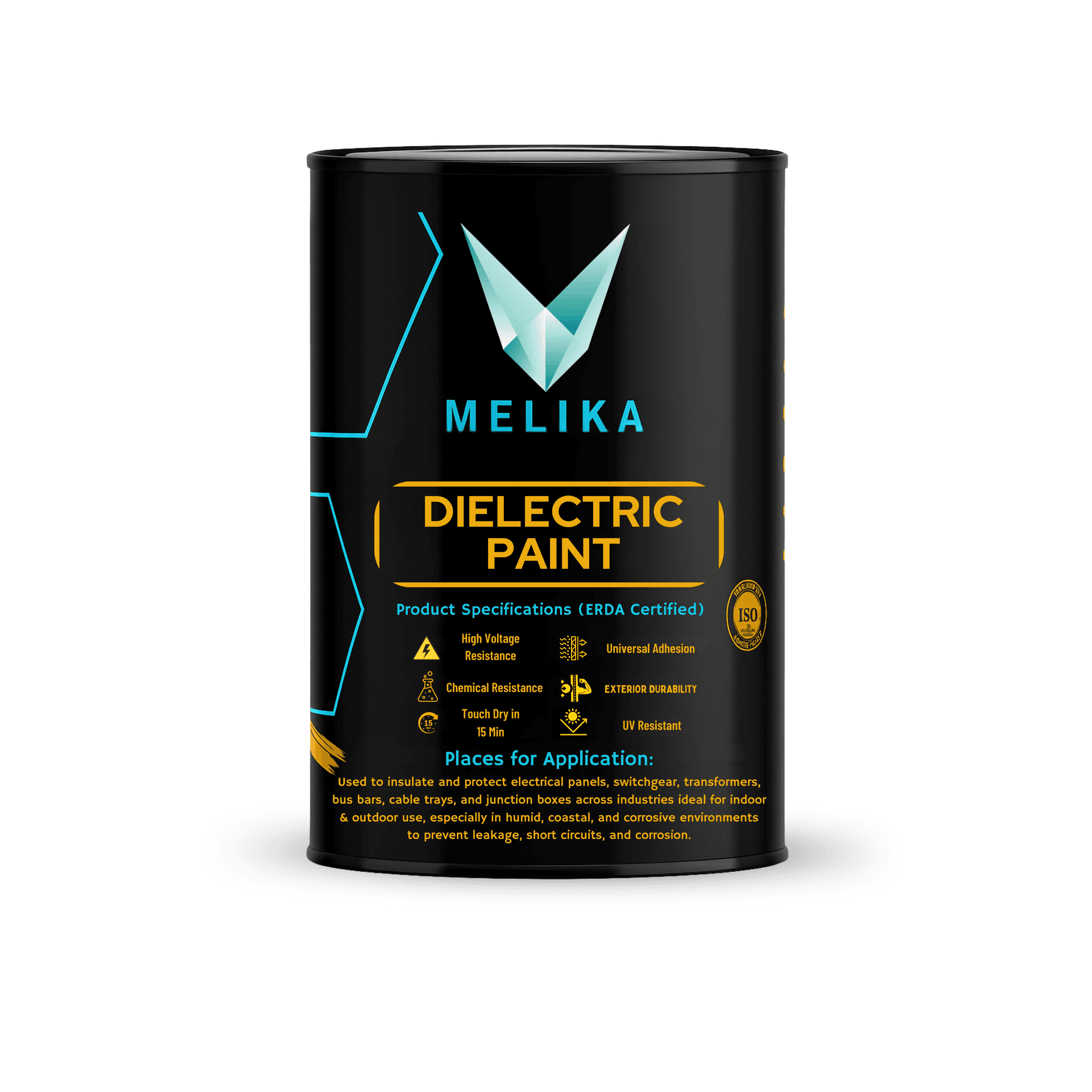
Dielectric Insulation Paint & Coating
Two-variant solvent-free insulation system — 5 kV (Paint) & 15.3 kV (Coating) — ERDA Certified
Insulation Paint
160–600 micron DFT — >5 kV
Insulation Coating
1.5–4.0 mm DFT — >15.3 kV
A high-performance solvent-free dielectric insulation system available in two variants: Insulation Paint (160–600 micron DFT, >5 kV) and Insulation Coating (1.5–4.0 mm DFT, >15.3 kV). Single component with no pot life, cure time as low as 10 minutes at ambient. Directly applicable to carbon steel, galvanized surfaces, or any primer paint. Designed for safe insulating properties in superconducting medium environments.
- Insulation Paint: >5 kV dielectric strength at 160 micron DFT
- Insulation Coating: >15.3 kV dielectric strength at 1.6 mm DFT
- Solvent free — no volatile compounds, zero evaporation loss
- Single component — no pot life, cure time ≥10 minutes at ambient
- Directly applicable on carbon steel, galvanized coating, or primer
- Shelf life >3 years — store at 0–30°C away from direct sunlight
Color Range
Custom shades available on request.
Our Clients





















Overview
Usage
- Applied directly on carbon-steel surfaces, cured galvanizing coatings, or any primer paint.
- Used on steel structures for safe insulation in superconducting medium environments.
- Protective coating for control panels, switchgear, and electrical distribution boards.
- Insulation for bus bars, cable trays, electrical enclosures, and substations.
- Used in OEM facilities, power plants, chemical plants, and refineries.
- Suitable for both indoor and outdoor electrical installations requiring dielectric protection.
Advantages
- Solvent free — no volatile compounds, environmentally responsible
- Single component — no mixing, no pot life limitations
- Fast cure: ≥10 minutes at ambient temperature
- Insulation Paint: >5.0 kV dielectric strength at 160 micron DFT
- Insulation Coating: >15.3 kV dielectric strength at 1.6 mm DFT
- Specific surface resistivity >1×10¹² Ω (IS2584 / IEC 60093 / ASTM D257)
- Pull-off adhesion ≥25 MPa on grit blasted steel (ASTM D4541)
- Excellent chemical resistance: 5–25% H₂SO₄, HCl, NaOH
- Hardness Shore D >65 — tough, durable surface
- Heat resistant: stable in aqua solution up to 50°C, dry condition up to 150°C
- Shelf life >3 years — store at 0–30°C
Packaging
Applications
Control Panels, Switchgear, Electrical Rooms, Bus Bars, Cable Trays, Steel Structures, Carbon Steel Surfaces, Galvanized Surfaces, Power Plants, Chemical Plants, Refineries, Substations, OEM Facilities, Data Centres, Superconducting Medium Environments
Product Details
- ERDA (Electrical Research and Development Association) certified
- Dielectric strength tested per IS2584
- Surface resistivity tested per IEC 60093 and ASTM D257
- Pull-off adhesion tested per ASTM D4541 / ISO 4624 on grit blasted steel
- Chemical resistance: Excellent against 5–25% H₂SO₄, HCl, and NaOH
- Corrosion resistance: Pass (ASTM G8) and accelerated (NH₄)₂SO₄/NaCl cycling
Application
- 1
Surface Preparation — Steel
Remove grease, oil and all contaminants. For carbon steel, abrasive blast to minimum SSPC SP10. The coating can be applied directly on prepared carbon-steel surfaces, cured galvanizing coatings, or any primer paint. Surface must be clean and dry before application.
- 2
Primer Application
Apply primer coat at a coverage rate of 86 ft² per Kg. Allow to cure for minimum 10 minutes at ambient before applying the top coat. Ensure uniform coverage with no missed areas.
- 3
Top Coat Application
Apply top coat at a coverage of 11 ft² per Kg. For Insulation Paint (5 kV), apply to achieve 160–600 micron DFT. For Insulation Coating (15.3 kV), apply multiple coats to achieve 1.5–4.0 mm DFT. Each coat must fully cure before the next.
- 4
Inspection & Testing
After full cure, verify dielectric strength using a holiday tester. Check surface resistivity >1×10¹² Ω. Inspect for pinholes or thin areas. Insulation Paint should achieve >5 kV at 160 micron; Insulation Coating should achieve >15.3 kV at 1.6 mm DFT.