
Acid Corrosion of Metal in Pickling, Fertilizer, and Chloro-Alkali Plants: Why It Happens and How to Stop It
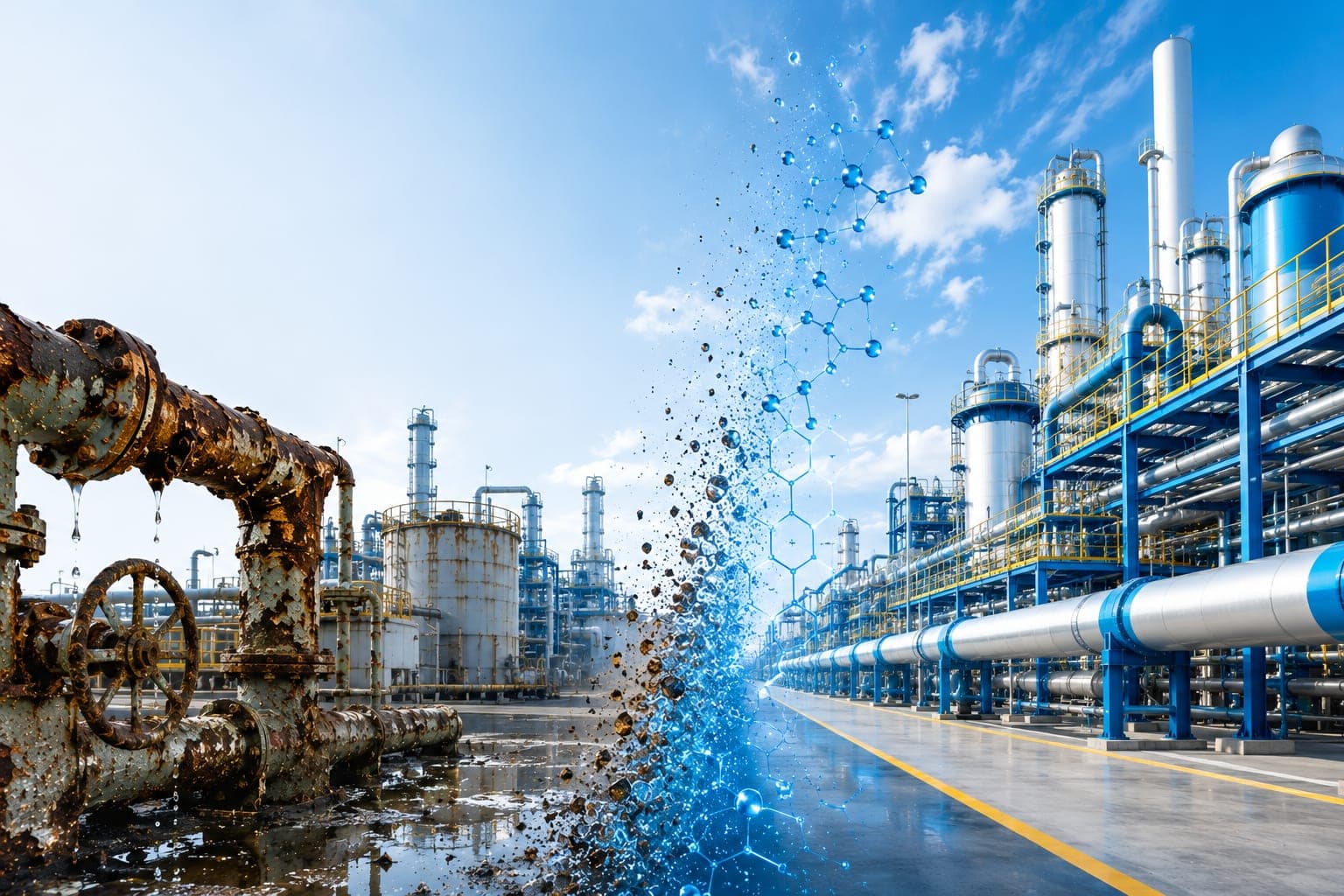
Pitted tank walls, flaking structural columns, corroded pipe supports — acid corrosion isn't a sudden event, it's a slow electrochemical reaction that quietly eats into capital equipment. Here's why it happens in pickling, fertilizer, and chloro-alkali plants, and how the right barrier system stops it.
Introduction
Walk into any acid pickling line, fertilizer plant, or chloro-alkali unit after a few years of operation, and you'll see the same story written on the steel: pitted tank walls, flaking structural columns, corroded pipe supports, and floors that have quietly eaten through their protective coating. Acid corrosion isn't a sudden event — it's a slow, continuous chemical reaction that, left unmanaged, eats into capital equipment and shortens plant life. Understanding why it happens is the first step to preventing it.
What Is Acid Corrosion, Really?
At its core, corrosion is an electrochemical reaction. When acid comes into contact with metal — typically mild steel or carbon steel used in structural and tank fabrication — hydrogen ions in the acid react with iron atoms on the metal surface.
This reaction dissolves the metal, releases hydrogen gas, and produces metal salts — iron chloride, iron sulfate, or iron phosphate, depending on the acid involved. The metal doesn't just get "eaten away" uniformly; it often pits, forming localized deep cavities that weaken structural integrity long before overall metal loss looks alarming.
What the Rate of Reaction Depends On
Acid concentration — higher concentration generally means faster attack, though some acids behave differently at very high concentrations due to passivation effects:
- Nitric Acid (HNO₃): Highly concentrated nitric acid passivates stainless steel by forming a thin chromium oxide layer, making it more resistant to corrosion than in dilute nitric acid.
- Sulfuric Acid (H₂SO₄): Carbon steel generally corrodes rapidly in dilute sulfuric acid, but in very high concentrations (typically above 93–98%), corrosion rates may decrease because a protective sulfate/oxide layer forms and the low water content limits the reaction.
- Phosphoric Acid (H₃PO₄): Can promote the formation of protective iron phosphate films under certain conditions, reducing the corrosion rate.
- Hydrochloric Acid (HCl): Does not exhibit passivation. Corrosion generally increases as concentration increases because chloride ions continuously break down protective oxide films — this is why HCl environments require specially formulated coatings such as MELIKA CRAC 2K for direct contact protection.
Beyond concentration, three other factors drive how fast the reaction runs:
- Temperature — corrosion rates roughly double for every 10°C rise in most acid systems.
- Flow and turbulence — moving acid removes protective films and accelerates attack compared to stagnant conditions.
- Presence of chlorides — chloride ions are particularly aggressive, breaking down passive oxide layers and driving pitting corrosion.
Where This Shows Up in Each Plant Type
Acid Pickling Lines
Pickling uses hydrochloric or sulfuric acid to strip mill scale and oxide layers from steel before further processing. The irony is hard to miss: the very acid used to clean steel is simultaneously attacking the tanks, structural supports, and floors that house the process. Pickling tanks operate at elevated temperatures (often 40–80°C), which accelerates corrosion significantly. Splash zones just above the acid line are often worse-hit than the immersed sections, because they see repeated wet–dry cycling and fume condensation.
Fertilizer Plants
Fertilizer manufacturing — particularly phosphoric acid and sulfuric acid production routes — combines multiple aggressive chemistries in one facility. Sulfuric acid plant (SAP) sections see hot, concentrated acid; phosphoric acid sections add fluorine compounds into the mix, which are notably aggressive toward both steel and concrete. Ammonia sections introduce an entirely different corrosion mechanism — alkaline stress corrosion cracking in certain steel grades — meaning a single fertilizer complex can present acid attack in one wing and alkaline attack in another.
Chloro-Alkali Plants
This is arguably the most corrosively hostile environment of the three. Wet chlorine gas is extremely aggressive toward most metals, hot caustic soda (up to 90°C) attacks differently but just as destructively, and the cell room floor sees constant exposure to brine, caustic drips, and chlorine-saturated humidity. Standard carbon steel corrodes rapidly in this environment; even coatings that perform well in acid pickling or fertilizer settings can fail here if not specifically rated for chlorine exposure.
Why Corrosion Control Gets Deprioritized — and Why That's a Mistake
Corrosion protection is easy to defer because the damage is invisible in the short term. A tank that's losing 0.5mm of wall thickness a year doesn't look any different after month three. But by the time pitting becomes visible or a structural member starts to flex, the plant is often looking at unplanned shutdown, tank replacement, or worse — a containment failure. In acid and chlorine environments specifically, corrosion-related failures also carry safety and environmental compliance risk, not just cost risk.
The economics are straightforward: protective lining and coating systems cost a fraction of what tank replacement, structural steel replacement, or an unplanned shutdown cost. Preventive protection is a maintenance-budget line item; reactive replacement is a capital-budget emergency.
How Corrosion Is Actually Prevented
1. Barrier Coatings & Protective Linings
The MELIKA CRAC series creates a highly chemical-resistant barrier between corrosive chemicals and the underlying steel or concrete, preventing direct contact and corrosion:
- CRAC SB (single-pack hybrid coating) — recommended for acetic acid and phosphoric acid exposure.
- CRAC HP (single-pack hybrid coating) — designed for highly aggressive industrial chemical environments.
- CRAC 2K (two-component system) — recommended for direct acid contact and immersion applications where maximum chemical resistance is required.
Important: the coating system must always match the specific chemical environment. A coating suitable for sulfuric acid pickling may not perform effectively in chlorine-rich chloro-alkali plants.
2. Cathodic Protection
Cathodic protection is widely used for buried or submerged steel structures. It electrochemically suppresses corrosion and is generally used in combination with protective coatings, not as a replacement.
3. Material Selection
For extremely aggressive environments, corrosion-resistant materials may be preferred, including:
- Stainless steel alloys
- PTFE-lined equipment
- Specialty corrosion-resistant alloys
4. Engineering Design & Detailing
Long-term corrosion protection also depends on proper engineering design:
- Proper drainage to prevent chemical accumulation
- Effective joint sealing
- Eliminating crevices where corrosive chemicals can collect
- Easy inspection and maintenance access
Most premature coating failures occur due to poor design and detailing rather than coating chemistry.
The MELIKA Solution
- CRAC SB — Single Pack Hybrid Coating for Acetic Acid & Phosphoric Acid
- CRAC HP — High-Performance Single Pack Hybrid Coating for aggressive industrial environments
- CRAC 2K — Two-Component System for Direct Acid Contact & Immersion Applications
MELIKA — Advanced Corrosion Protection for Steel & Concrete Structures. Protecting industries with innovative, high-performance corrosion solutions.
The Bottom Line
Acid corrosion in pickling, fertilizer, and chloro-alkali plants isn't a question of if but when, unless the metal and concrete surfaces exposed to these chemistries are specifically protected for the chemical environment they're in. The right barrier system, matched correctly to the acid, temperature, and concentration profile of each zone, is what separates a plant that runs reliably for decades from one that's constantly fighting unplanned corrosion failures.
Zara Globe Solutions works with advanced, chemical-resistant coating systems for industrial structural protection in acid and alkali process environments.